Bienvenue / Welcome to Nelumbo - Le Journal !

Ce blog met à votre disposition des informations sur l'univers culturel et sur le monde de la recherche et de la science. Vous trouverez ici des annonces à propos de séminaires ou de conférences à venir, sur la recherche en sciences sociales (plus particulièrement en Asie du Sud-est), sur des évènements scientifiques et culturels, propositions d'emploi, des appels à contribution, etc.
Pour recevoir les actualités de Nelumbo, devenez membres ou souscrivez au RSS.
Contactez-moi pour toute requête, proposition de publication d'un article, suggestion d'un évènement, ou autre commentaire. Bonne visite !
---
This blog's purpose is to inform you about the cultural studies, research and science world. Nelumbo is generally focused on issues related to archaeology, history, and culture in Southeast Asia. It's also a place for posts and ads about seminars or conferences, on research in social sciences (particularly in South-East Asia), on scientific and cultural events, publications, calls for papers, jop posts, etc.
Feel free to use the search box above, subscribe for RSS, or become member.
Contact me for any request, recommend an article or submit contribution, suggest event, or something else. Corrections, comments and questions are most welcome. Have a good time !
Affichage des articles dont le libellé est politique. Afficher tous les articles

30 janv. 2011

[Call for Papers] 2011 Conference on Decentralization and Democratization in Southeast Asia.

-
In 2011, the Freiburg Southeast Asia Study Group will organize an international conference on decentralization and democratization in Southeast Asia with a special section on 10 years of decentralization in Indonesia.
The conference will take place from June 15-17, 2011 in Freiburg, Germany. 

Please refer to this online link : www.southeastasianstudies.uni-freiburg.de/...

The post-Cold War period has witnessed major shifts in the quest for more democratic and more decentralized governance structures in Southeast Asia.
With its „big bang" decentralization program launched in 1991, the Philippines spearheaded these changes. A decade later, in 2001, Indonesia embarked upon an even more ambitious decentralization and democratization process and has now become one of the biggest democracies in the world. Also Vietnam is undergoing a decentralization process since the late 1990s, albeit more incrementally than Indonesia and the Philippines.

Yet, democratization and concomitant governance reforms in the region are fragile as the 2006 coup and recent political unrest in Thailand suggest.
Decentralization reforms have to contend with the resistance of major veto players ranging from the central bureaucracy to the military and entrenched local elites. This resistance is intertwined with cultural (re)constructions, identity politics and popular representations. The outcome of this renegotiation of governance structures, economic patterns and cultural identifications is by no means clear. It often leads to unexpected results which are not always in conformity with the objectives of the reformers. This conference is devoted to the scholarly analysis of these changes and a debate about the developments ahead.

A special section of the conference is devoted to commemorate and analyze 10 years of decentralization in Indonesia. After a decade of decentralization, it is time to evaluate and to assess decentralization's achievements and shortcomings within economy and political processes as well as for social and cultural discourses.

The conference pursues an interdisciplinary approach and intends to bring together scholars from economics, political science, public administration, anthropology, history, and related disciplines. It is organized by the
Freiburg Southeast Asian Study Group at the University of Freiburg (www.southeastasianstudies.uni-freiburg.de).

You are cordially invited to submit an extended abstract (300 words) online by the 15th of February 2011 at this website.
-

26 janv. 2011

[Emploi] Postdoc level scientist (India) | NIAS

-
The National Institute of Advanced Studies (NIAS) is a multidisciplinary research institute located in Bangalore, India. We are searching for a postdoctoral level social scientist to work in our research programme entitled :
Provincial Globalisation : The Impact of Reverse Transnational Flows in India Regional Towns

This is an international collaborative programme of the Amsterdam Institute for Social Science Research (AISSR), University of Amsterdam (UvA), and NIAS. The five-year research programme explores processes of globalisation at the regional level by mapping transnational networks and flows of resources connecting migrants with their home regions, and the influence of these transfers on local political, economic, and social-cultural structures and processes.

Eligibility
The selected researcher will design and carry out an independent project on transnational migration and resource flows from migrants. Candidates should have finished the PhD degree in any social science (except economics), preferably with specialisation in migration, transnational, and/or development studies. The successful candidate will have strong analytical skills, a sound conceptual/ theoretical grounding in his/ her discipline, the ability to utilise and combine diverse data sources at different scales, and excellent writing and organisational skills. The postdoctoral researcher will work in an international multidisciplinary team that includes specialisations in anthropology, sociology and economics. This is a full-time two-year position based at NIAS. Salary will be commensurate with qualifications and experience.

Application
Applicants should submit their curriculum vitae including the names and addresses of three referees, a sample of published work, and a brief research proposal (3-5 pages) based on the detailed outline of the research programme, which will be sent to applicants upon enquiry.
Deadline for applications is January 31, 2011.

Contact

Interested candidates may write to :
Prof. Carol Upadhya
School of Social Sciences
National Institute of Advanced Studies
Indian Institute of Science Campus
Bangalore 560012 India 

1 nov. 2010

[Séminaire] Politiques des sciences - EHESS.

ÉCOLE DES HAUTES ÉTUDES EN SCIENCES SOCIALES
Séminaire « Politiques des sciences » 2010-2011
Première séance : Le train des « réformes »
laisse-t-il Université et communauté universitaire à quai ?

Jeudi 4 novembre de 17h à 19h, (exceptionnellement en salle 7 au 105 boulevard Raspail, Paris VIe)

Intervenants
- François Vatin (professeur de sociologie à l'Université de Paris X) : «Quelle place pour l'Université dans l'enseignement supérieur ? »
- Annie Vinokur (professeur émérite de sciences économiques à l’Université de  Paris X) : «Liberté académique et autonomie des universités : entre discours et enjeux de pouvoir »
Modérateur : Michel Barthélémy

Au-delà des mesures qui ont été considérées comme les déclencheurs du  mouvement universitaire du printemps 2009 (réforme de la formation des  enseignants ; modification du statut des universitaires), ledit mouvement  a été l’occasion de rendre publics un certain nombre de problèmes qui  affectent la place et les missions de l’université au sein de  l’enseignement supérieur et redéfinissent en profondeur, à la faveur d’une  équivoque entretenue sur l’acception du terme « autonomie », le mode de  gouvernement traditionnel de l’université. Celui-ci, proche d’un modèle  parlementariste, est remplacé par un modèle managérial, qui emprunte ses  outils et méthodes au monde de l’entreprise de service.
Pour éclairer notre réflexion sur la place et la destinée de l’université au sein de l’enseignement supérieur  français, nous avons fait appel à deux spécialistes des questions d’enseignement, un sociologue et une économiste. Le premier pour évoquer la question de la direction que pourrait prendre une réforme de l’université compte tenu des problèmes que posent la diversité et l’hétérogénéité de l’enseignement supérieur dans son ensemble. La seconde s’attachera à démêler les significations et usages contradictoires dont fait l’objet la notion d’autonomie selon à qui et à quoi elle s’applique.   
Comptes-rendus et fichiers audio des séances de l’année 2009-2010 sont disponibles à http://pds.hypotheses.org
 
Et ensuite ?

Deuxième séance - 25 novembre – Observer la « modernisation » :
Les Labex dans le meccano de la Générale: état des lieux en SHS

Après les pôles de compétitivité, les pôles de recherche et d’enseignement supérieur, les campus d’excellence, les équipements d’excellence, l’épisode en cours dans la restructuration forcée du dispositif de recherche est celui des « laboratoires d’excellence » qui, nous dit-on, concentreront les ressources importantes résultant du grand emprunt. L’appel d’offres a été publié cet été, les projets soumis le 9 novembre, la sélection sera opérée par l’ANR et les résultats proclamés d’ici la fin de l’année. Quels sont les projets en SHS, comment ont-ils été élaborés, comment seront-ils évalués, quelles dynamiques cette mise en concurrence généralisée a-t-elle déclenchée dans les unités de recherche, au sein des établissements, entre établissements ? Quelle nouvelle géographie institutionnelle et intellectuelle la ministre est-elle en train de mettre en place ? Des collègues qui participent à ces projets à l’EHESS, d’autres qui n’y participent pas, des directeurs de centres de l’Ecole, sont invités à mettre en commun leurs expériences et leurs points de vue sur le processus en cours.

Intervenant : Philippe Büttgen (CNRS-EPHE, Laboratoire d'études sur les monothéismes) – «  Le ‘Grand Emprunt’, l'enseignement supérieur et la recherche (décembre 2009-novembre 2010) »

Table-ronde : Isabelle Backouche (directrice du CRH, projet Territoires), Marc Bessin (IRIS, projet Politique et société), Alain Blum (directeur du CERCEC, projet Dynamiques asiatiques), Christian Jouhaud (CRH-GRIHL), Frédérique Matonti (CRPS-Paris 1, projet Politique et société), Albert Ogien (IMM-CEMS, projet Politique et société), Sophie Pochic (CMH, projet Travail)
Modérateur : Robert Descimon

Troisième séance - 9 décembre – Observer la « modernisation » :
Une place pour la folie ? Le nouveau management des institutions psychiatriques 
Le "new public management" est en marche dans tous les domaines de l'action publique. L'université et la recherche n'en ont subi le choc que depuis deux ou trois ans, mais l'hôpital en est la cible depuis longtemps. Dans le domaine de la psychiatrie, on peut observer une puissante convergence entre les injonctions gestionnaires et la montée de nouvelles pratiques du soin qui tendent à faire taire les sujets souffrants et la folie elle-même. Cette séance a pour objet de décrire cette réalité et les résistances qu’elle suscite, au plus près de l'expérience.

Intervenants :
- Loriane Brunessaux (Utopsy et Appel des 39) – «  Expérience d’une interne en psychiatrie dans un service de thérapie cognitive et comportementale »
- Mathieu Bellahsen (Utopsy et Appel des 39) –  « Management de l’hôpital et choix thérapeutiques »
- Richard Rechtman (ASM13 et EHESS) – « Existe-t-il une psychothérapie institutionnelle managériale ? »
Modérateur : Christian Topalov
Adresses électroniques de contact : agier(at)ehess.fr, Michel.Barthélémy(at)ehess.fr, descimon(at)ehess.fr, topalov(at)ehess.fr,

16 oct. 2010

[Publication] Irasec / Norms and Practices in Contemporary Rural Vietnam

-
Social Interaction between Authorities and People
Christian Culas, Nguyen Van Suu & Nguyen Thi Thanh Binh

Edited by Christian Culas & Nguyen Van Suu
Irasec, Occasional Paper 15, October 2010, 138 p, Downloadable for Free
Since the 1980s, while trying to maintain political stability and territorial integrity, the Vietnamese state has strongly moved towards the transformation of a centrally-planned economy to a more market-oriented model, in which private, foreign and joint-venture businesses are increasingly becoming the key pillars of the national economy. Another key aspect of the Đổi Mới’s agenda was a fundamental shift in the party-state’s foreign relations policy toward a normalization of Vietnam’s diplomatic and trading relations with China, the United States, and other countries since the early 1990s. Over twenty years after the Đổi Mới renewal renovation, Vietnam has been praised by various domestic and international institutions for its “impressive” achievements in socio-economic development and poverty reduction and for its gradual liberalization and market diversification, coupled with its commitment to equality. Consequently, this has changed the relationship between the party-state and society in a number of fields, including the control of agricultural land and other forms of natural resources. Such transition marks a great change in our scholarly understanding of Vietnam. This Occasional Paper will contribute useful elements for understanding the social, political and economic dimensions of contemporary rural Vietnam.

Contacts :
- Benoît de Tréglodé, Director/directeur
- Jérémy Jammes, Deputy director/directeur adjoint
IRASEC c/o French Embassy
29, Sathorn Tai Road, Bangkok 10120 Thailand
Tel: (66) 026 27 21 87
www.irasec.com

14 sept. 2010

[Article] Indonesian Academic Claims Borobudur Temple Is Islamic

September 02, 2010 | Jakarta Globe

Jakarta. An obscure group led by an academic from a respected Islamic university in Indonesia is reportedly set to petition the Constitutional Court to declare that the Borobudur Temple in Central Java belongs to Islam.
Kompasiana.com reported that researchers from the Islam and Ancient History Study Institution, led by Fahmi Basya, an Islamic mathematics lecturer from Syarif Hidayatullah Islamic State University in Jakarta, claimed they had solid proof the Buddhist temple was built by the Prophet Solomon’s “genie soldiers.”
Solomon, who according to the Hebrew Bible was a king of Israel, is known as the prophet Sulayman in the Koran.
According to the article, the researchers had connected Borobudur with the Kraton Ratu Boko (Queen Boko’s Palace) near the Hindu temple Prambanan in Central Java, claiming that Boko was actually another name for Queen Balqis, the wife of Sulayman.
Buddhist monks pray at Borobudur Temple in Central Java. A group of Indonesian researchers claim that the temple was built by Solomon, as Islamic prophet. (Antara Photo/Anis Efizudin)
[Read the full article here]

6 sept. 2010

Revue de Presse : expulsions des "Roms" du territoire français.

Une manière de faire le point sur l'actualité en France, et de se faire aussi une opinion. Bonne lecture.
-
"La France donne un prétexte à la Bulgarie pour durcir sa politique envers les Roms" | Le Monde.fr | Alexandre Lévy | 31.08.10
Vu de Sofia, il n'y avait pas de problème avec les Roms. Du moins, pas au début, lorsque le gouvernement bulgare offrait sa pleine coopération pour "établir le nombre et l'identité" de ses citoyens qui devaient être expulsés de France et lorsque les associations tsiganes locales restaient muettes, quand elles ne saluaient pas l'action de Paris. [...]

Chez les Roms, "intouchables" de Bulgarie | Le Monde.fr | Alexandre Lévy | 31/08/2010

Une communauté en manque de leaders | Le Monde.fr | | Alexandre Lévy | 31/08/10
Pour certains, les Roms européens manquent cruellement "d'amis" influents pour défendre leur cause autrement que par les protestations des défenseurs des droits de l'homme. En Bulgarie, les Roms manquent de représentativité tout court – à la grande différence de leurs concitoyens d'origine turque. Pas de "parti rom", de députés, de figures charismatiques ou de sympathisants. Et le problème des nombreuses associations de Roms n'est pas tant qu'elles ne sont pas entendues en Bulgarie, mais le fait qu'on ne les prend pas au sérieux. [...]

Les critiques se multiplient en Roumanie et en Bulgarie contre la politique française à l'égard des Roms, alors que la France compte expulser 700 Roms de son territoire d'ici à la fin août. [...]
Les enfants Roms sont les premières victimes des expulsions à répétition qui interrompent leurs parcours scolaires. [AFP/JEFF PACHOUD]
Paris toujours sous le feu des critiques au sujet des Roms | L’Express | par Reuters | 27/08/2010
Les critiques continuent à pleuvoir en France et à l'étranger contre la politique de la France à l'égard des Roms, mais Paris persiste dans sa volonté de démanteler leurs camps et de les renvoyer dans leurs pays. [...]

Eric Besson veut étendre les possibilités d'expulsions des Roms | Le Point | par AFP| 26/08/2010
Le ministre de l'Immigration Éric Besson a annoncé, lundi, un projet d'amendement à la loi permettant de reconduire aux frontières des étrangers en cas de "menace à l'ordre public à l'occasion d'actes répétés de vols ou de mendicité agressive". [...]

Le gouvernement français de plus en plus divisé sur la sécurité | L’Express | par Reuters | 31/08/2010
Le gouvernement français apparaît de plus en plus divisé sur la politique sécuritaire de Nicolas Sarkozy à l'approche d'un remaniement ministériel qui accentue encore la nervosité au sein de la majorité présidentielle.
[...]

La HALDE appelle à la levée des mesures transitoires visant les citoyens bulgares et roumains | Questions d’étrangers / Le blog de Migration Conseil | 21/08/2010
Droits et devoirs administratifs des Roms : conséquences du régime transitoire Roumain et Bulgare.
Ni citoyens communautaires, ni ressortissants étrangers non communautaires, un peuple discriminé.
La Roumanie et la Bulgarie, dont la plupart des Roms de France sont ressortissants, sont entrées dans l’Union Européenne en 2007.
Normalement, les ressortissants européens bénéficient de la liberté de circulation : ils peuvent librement passer les frontières à l’intérieur de l’Europe, s’installer et travailler dans un autre pays de l’UE. C’est ce qu’on appelle l’espace Schengen. [...]

"Il est urgent d'arrêter cette chasse aux Roms" | L'Express | Par Kévin Le Louargant | 26/08/2010
Réuni à l'occasion de la publication de son rapport annuel, le collectif Romeurope a dénoncé la "politique disproportionnée" du gouvernement à l'égard des 10 000 à 15 000 Roms de France. [...]

citizenside.com
Les expulsions de camps illégaux de Roms | La Depeche.fr | par AFP | 28/07/2010
Voici la la liste des principales expulsions de camps illégaux de roms par les forces de l'ordre depuis 2009, généralement à la suite de décisions de justice. [...]

La détresse des Roms | La Libre Belgique | par George Soros |  26/08/2010
Les Roms sont confrontés à une forme de discrimination inédite en Europe depuis la Deuxième Guerre mondiale. Hommes, femmes et enfants sont expulsés dans plusieurs démocraties sous prétexte qu’ils constitueraient un risque pour l’ordre public. Une opinion de George Soros, dirige le Fond de gestion Soros. [...]
-

4 août 2010

[Crise] Indonesia: The Deepening Impasse in Papua.

INTERNATIONAL CRISIS GROUP - NEW BRIEFING
Indonesia: The Deepening Impasse in Papua

Jakarta/Brussels, 3 August 2010 : The Indonesian government needs urgently to address discontent in Papua, its easternmost region, and recognise that the root of the problem is political, not economic.
Indonesia: The Deepening Impasse in Papua,* the latest briefing from the International Crisis Group, examines the political fallout from Jakarta’s rejection of a local initiative to require all candidates in district-level elections to be indigenous Papuans. The debate that followed brought to the fore Papuan concerns about being increasingly marginalised by steady in-migration from other parts of Indonesia and unhappiness with implementation of a 2001 autonomy package.
“The gulf in perceptions between Jakarta and Papua is huge”, says Sidney Jones, Crisis Group’s Senior Adviser. “Jakarta sees autonomy largely in terms of giving Papua more money, while Papuans want more authority to make political decisions without constantly being trumped by national laws. The only way to bridge the gap is to talk.”
The current impasse began with the November 2009 decision on district candidates by the Papuan People’s Council (Majelis Rakyat Papua, MRP), a body established under the autonomy law and charged with protecting Papuan values and culture. Jakarta rejected it on several grounds, including that it was discriminatory and in violation of a national law on local government. Officials also argued that the council had no authority to issue decisions and that it was overstepping its mandate by venturing into political affairs.
Anger over the rejection led to a Papua-wide consultation hosted by the MRP in June which produced eleven recommendations, including that autonomy be “handed back” to Jakarta, an internationally-mediated dialogue held, and a referendum on Papua’s political status conducted.
The uproar finally got Jakarta’s attention, and in late July, for the first time, Indonesian President Susilo Bambang Yudhoyono directly addressed the issue – but by calling for an audit of special autonomy funds.
“To move forward, the president needs to explore directly with credible Papuan leaders how political autonomy can be expanded, affirmative action policies strengthened, and fears about migration addressed”, says Jim Della-Giacoma, Crisis Group’s South East Asia Project Director. “Unless these issues are tackled head on, increased radicalisation in Papua is likely.”

*Read the full Crisis Group report on the website: http://www.crisisgroup.org

24 juil. 2010

[Article] Festivities celebrate temple

08 July 2010 | Phnom Penh Post | Vong Sokheng

Preah Vihear province
During the ceremony, Buddhist monks chanted blessings while performers beat traditional Khmer drums representing the warrior ethic of the Angkorian empire.
In an address, Chea Dara, deputy commander of the Royal Cambodian Armed Forces, paid tribute to the “smart leadership” of Prime Minister Hun Sen, which he said had helped protect the temple from Thai occupation.
“We are determined to protect Preah Vihear temple and its sovereignty according to the policy of Prime Minister Hun Sen, who ordered us not to invade 1 millimetre into Thailand, and also not to allow our sovereignty to be invaded by 1 millimetre either,” he said.
The temple’s July 2008 listing by UNESCO was highly controversial in Thailand, and triggered a rapid troop buildup along the border with Cambodia. The standoff has been punctuated by a series of small-scale clashes – some of them deadly – along the frontier.
Phay Siphan, spokesman for the Council of Ministers, said the celebration was designed to raise awareness about the value of the ancient temple as an emblem of Cambodian history and culture.
In a press conference at Wat Keo Sekha Kirisvarak yesterday, he said the issue of ownership was definitively settled by a 1962 World Court ruling that handed the temple to Cambodia.
“We are here to look for cultural conservation and preservation, but the government of Thailand looks at the temple as a border conflict,” he said.
“We take this important day to send a message to Thai soldiers and the international community that Cambodia has no border conflict with Thailand.”
He added that in 2009, the government spent US$99 million conserving Preah Vihear and improving road access to it.
Hang Soth, director general of the Preah Vihear National Authority, said that ever since the UNESCO listing, projects had been undertaken to ready the temple for an increase in tourists.
“My work here is to focus on the conservation, restoration and research of the heritage site in order to ensure its sustainable development as a tourist destination,” he said.
Hang Soth said much progress on preservation had been made in the past two years, but that work had been hamstrung by tension with Thailand.
He said that with international support, the 11-century ruins could finally get the attention they deserve after years of civil war and conflict.
“We hope that the international community will support our research and conservation projects,” he said.


Evidence in Thai bombing
Also yesterday, Thai police said they found evidence linking a pair of Red Shirt activists to the attempted bombing of a political party headquarters in Bangkok on June 22, following their deportation from Cambodia on Monday.


Photo by: Heng Chivoan

21 juil. 2010

[Article] Le Vietnam face à la crise et à l'avenir du régime.

29.06.10  - Le Monde | Philippe Delalande, économiste, membre d'Asie 21-Futuribles

Le 11e congrès du Parti communiste vietnamien aura lieu en janvier 2011. Il devra renouveler une partie des dirigeants, fixer une ligne de conduite pour sortir l'économie de la crise et, enfin, améliorer le fonctionnement du régime politique.

Le secrétaire général, Nông Duc Manh, arrive au terme de son second mandat et ne peut être reconduit. Les postulants au secrétariat général doivent remplir trois conditions. Être âgés de moins de 65 ans afin de ne pas dépasser 70 ans au terme de leur mandat de cinq ans, être membres du comité central. Mais la pratique veut que le secrétaire général soit issu du bureau politique de 15 membres où siègent les principaux dirigeants de l'État. Enfin, selon une règle non écrite, il doit provenir du nord du pays.

L'actuel président de la République, âgé de 68 ans, devra aussi quitter son mandat comme le président de l'Assemblée nationale, âgé de 66 ans. Le premier ministre Nguyên Tan Dung a 61 ans, mais il est du Sud. Il a des chances d'être reconduit à son poste, ce qui laisserait disponible celui de secrétaire général pour une personnalité du Nord. Laquelle ? Les pronostics vont bon train à Hanoï.

Un nom circule plus que d'autres :  [ ... Lire la suite ... ]
Article paru dans l'édition du 30.06.10

14 juil. 2010

[Rapport] Bridging Thailand’s Deep Divide.

INTERNATIONAL CRISIS GROUP - NEW REPORT
Bridging Thailand’s Deep Divide

Bangkok/Brussels, 5 July 2010 : The Thai government should immediately lift the state of emergency to create conditions for national reconciliation that would allow the building of a new political consensus and the holding of peaceful elections if the country is to return to stability.

Bridging Thailand’s Deep Divide,* the latest report from the International Crisis Group, says the protracted tussle between the royalist establishment and those allied with ousted Prime Minister Thaksin Shinawatra has left the country deeply polarised. In April and May it sparked the most violent political confrontations in decades, killing at least 90 people, injuring nearly 2,000 and inflicting deep wounds on the national psyche. Shortly before authorising a violent crackdown on anti-government protestors by the army, the establishment-backed government of Abhisit Vejjajiva unilaterally offered to opposition groups a “roadmap” to national reconciliation. It now persists with this plan despite having created an atmosphere of repression where basic rights of the pro-Thaksin “Red Shirt” movement are denied by emergency laws.
[ ... Read the full article here ]

To support our work in Asia and around the world, please click here. 
*Read the full Crisis Group report on our website: www.crisisgroup.org
Andrew Stroehlein (Brussels) +32 (0) 2 541 1635
Kimberly Abbott (Washington) +1 202 785 1602
To contact Crisis Group media please click here

[Article] Le Vietnam face à la crise et à l'avenir du régime.

29 juin 2010 | Le Monde | Philippe Delalande, économiste, membre d'Asie 21-Futuribles

Le 11e congrès du Parti communiste vietnamien aura lieu en janvier 2011. Il devra renouveler une partie des dirigeants, fixer une ligne de conduite pour sortir l'économie de la crise et, enfin, améliorer le fonctionnement du régime politique.
Le secrétaire général, Nông Duc Manh, arrive au terme de son second mandat et ne peut être reconduit. Les postulants au secrétariat général doivent remplir trois conditions. Etre âgés de moins de 65 ans afin de ne pas dépasser 70 ans au terme de leur mandat de cinq ans, être membres du comité central. Mais la pratique veut que le secrétaire général soit issu du bureau politique de 15 membres où siègent les principaux dirigeants de l'Etat. Enfin, selon une règle non écrite, il doit provenir du nord du pays.
L'actuel président de la République, âgé de 68 ans, devra aussi quitter son mandat comme le président de l'Assemblée nationale, âgé de 66 ans. Le premier ministre Nguyên Tan Dung a 61 ans, mais il est du Sud. Il a des chances d'être reconduit à son poste, ce qui laisserait disponible celui de secrétaire général pour une personnalité du Nord. Laquelle ? Les pronostics vont bon train à Hanoï.
Un nom circule plus que d'autres : Tô Huy Rua. Il a été promu au bureau politique, après le congrès de 2006, par le comité central de janvier 2009. Ce peut être signe d'une cooptation préparée. Il a 63 ans, il est du Nord. Mais surtout, il occupe une fonction stratégique au bureau politique. Il préside la commission de propagande et d'éducation du comité central. Il a ainsi la haute main sur la doctrine du parti et sur la formation des cadres. On le dit énergique. Il a le souci de renforcer le parti, ossature politique du pays, ce qui ne signifie pas le raidir et le fermer. Les postes de présidents de la République et de l'Assemblée nationale devront aussi être pourvus. Les tractations sont ouvertes, déjà !
Les problèmes à résoudre sont urgents. La crise a ébranlé le cours d'une croissance forte et régulière depuis 1991. Le premier semestre 2008 a vu l'inflation s'accélérer jusqu'à 28 % sur une pente annuelle. Les Vietnamiens, qui n'ont jamais eu grande confiance dans leur monnaie, l'ont fuie au profit de l'or et du dollar. Le marché noir des devises a ressurgi. Le pouvoir a donné le sentiment de paniquer. Il a tenté de réduire la masse monétaire, a interdit l'importation d'or. Les grèves se sont multipliées face à la baisse du pouvoir d'achat.
Heureusement, en fin d'année 2008, la crise économique venue d'Occident a stabilisé le cours des matières premières et des produits importés. Mais les exportations vers le marché américain et européen ont brutalement décru.
Un plan de relance a été mis en place. Au terme de l'année 2009, la croissance du produit intérieur brut (PIB) s'établit à 5,1 %, ce qui n'est pas si mal. Mais le Vietnam accumule les déficits, déficit budgétaire de 9 % du PIB, déficit commercial et déficit de la balance des paiements. Les réserves de change couvrent à peine trois mois d'importation. Le Vietnam mesure sa dépendance envers l'étranger. La valeur de ses exportations représente près de 70 % du PIB. Le pays doit compter sur les flux d'investissements étrangers pour équilibrer sa balance des paiements.
Il n'est pas exclu de devoir recourir au Fonds monétaire international fin 2010. Si la situation est délicate, elle n'est cependant pas dramatique. La dette publique n'est que de 48 % du PIB. Et l'Asie redevient le moteur de la croissance mondiale. Elle devrait profiter au Vietnam. Cependant le Vietnam, trop vulnérable aux fluctuations de l'économie mondiale, a conscience de perdre la maîtrise de son modèle de développement. Le parti doit tirer les leçons de cette période, améliorer son processus de décision, éviter les flottements des années 2008-2009. Ce sera un thème du congrès.
En Chine, Hu Jintao est secrétaire général du parti, chef de l'Etat et président de la Commission militaire centrale. 
Article paru dans l'édition du 30.06.10

8 juil. 2010

[Conference] Indonesia: what role as a contemporary global actor?

Monday 1 to Thursday 4 March 2010
With support from the Foreign and Commonwealth Office, London

President Susilo Bambang Yudhoyono was returned for a second five-year term of office in 2009, becoming the country's first leader democratically re-elected and giving Indonesia a welcome dose of continuity. Will this enable Indonesia to play a more significant role in global issues?

The conference aimed:
    - to take stock of recent political and economic developments in Indonesia;
    - to examine Indonesia's potential as a growing 21st century global actor, and what needs to be done to strengthen Indonesia's governance, economy and social development to enable it to address contemporary challenges domestically and internationally;
    - to map out how Indonesia can further develop its contribution towards effecting change internationally through the United Nations, G20 and regional architecture.

Among those taking part in the conference were the State Minister for National Development Planning (BAPPENAS), Professor Armida Alisyahbana, Governor of Papua province Barnabus Suebu, Heru Prasaetyo, Deputy Head of the Presidential Unit for the Management of Programs, John Prasetio, Vice Chairman of the Indonesia Chamber of Commerce and Industry (KADIN), Dr Rizal Sukma, Executive Director of the Jakarta Centre for Strategic and International Studies, Professor Anies Baswedan, President of Paramadina University and Yuli Ismartono, Executive Editor of Tempo. For a copy of the conference programme, click here.

Among key issues arising in discussion were:
    - Indonesia would like to be recognised as a place where democracy and Islam co-exist, but not as a Muslim democracy;
    - Indonesia's parliamentarians tend to adopt a protectionist stance towards free trade and economic reform, and the government needs to take a leadership role in countering such views;
    - while there are ideological differences between political parties, parties do not have political manifestos spelling out policies; there is a need for the parliament to become more transparent, with voting clearly recorded, and accountable to local constituents;
    - despite radical decentralisation, seen by some as 'over-decentralisation', achievements in local government are attributable to inspired leadership rather than systemic change; there is a serious need for reform of the civil service;
    - There needs to be much greater coordination in Indonesia's foreign policy, and on the domestic front the government needs to see policy through consistently, with better executive coordination and accountability;
    - Indonesia should perhaps concentrate on two or three items on the global agenda where its involvement could make a notable impact, rather than spread its interest across a broad range of challenging issues; it could focus its activity in its immediate region although going global is felt by some to be the only option;
    - ASEAN appears logjammed, and Indonesia should assert leadership while recognising the likely absence of support from some members of the grouping for Indonesia's proposals; efforts should be made to revive EU-ASEAN cooperation;
    - While the international community has high expectations of Indonesia's role in global issues, some question whether Indonesia should not concentrate on tackling domestic challenges, such as sustaining and improving economic growth and competitiveness, and tackling poverty, rather than looking to assume a significant role internationally; there is a need to bridge the gap between capability and expectation.

      For coverage of the conference in the Indonesian media, see :
- "Insight: debating Indonesia's global role", Dr Rizal Sukma, The Jakarta Post, 11 March 2010.
- "Postscript from Wilton Park", Yuli Ismartono, Tempo, 16 March 2010.

For a copy of the report summarising the conference discussions, click here.

4 juin 2010

[Conference] Nora Taylor (Maison de l'Asie, Paris, France).

24 juin 2010 - 12h15-13h30                              Nora Taylor                              EFEO/Maison de l'Asie, salon, 1er étage.

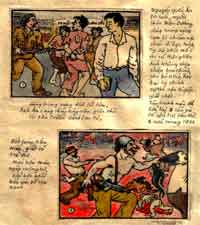
Colonial Resistance as Seen by Vietnamese Graphic Artists from the 1950s

This talk will discuss a collection of recently uncovered and previously unpublished political comic strips depicting the Vietnamese resistance to French colonial rule. The strip was created by three artists: Pham Thong, Mai Van Nam and Ton Duc Luong, all former students of the Ecole des Beaux-Arts d’Indochine in Hanoi. The drawings offer not only vivid eye witness accounts of historic events but also illustrate the extent of artists’ engagements in political issues of the day. The comic book is a relatively underdeveloped art and literary genre in Vietnam, and the discovery of this series proves the need for further research in, and preservation of, valuable iconographic archives both in Vietnam and abroad.

EFEO/Maison de l'Asie : 22 avenue du Président Wilson, Paris 16ème
Nora Taylor (School of the Art Institute of Chicago)

5 mai 2010

Philippines: Pre-election Tensions in Central Mindanao.

International Crisis Group | Asia Briefing Nº103 | Jakarta/Brussels | 4 May 2010
--
        As the Philippine election on 10 May 2010 draws nearer, voters in central Mindanao are focused on the political fallout from the “Maguindanao massacre”; clan politics; the new automated election system; and whether any agree­ment between the Philippines gov­ernment and the Moro Islamic Liberation Front (MILF) is possible before President Gloria Macapagal-Arroyo leaves office on 30 June.
Voters will choose a new president and vice president, members of the national Congress, and some 17,000 local executive and legislative positions. The biggest question in central Mindanao, however, is how much the power of the Ampatuan clan has been weakened by the arrests of its senior members for suspected involvement in the massacre. Fear that lawyers for the patriarch, Andal Ampatuan Sr, will somehow find a way to obtain the release of their client remain palpable in and around Maguindanao province. As pre-trial legal proceedings drag on, there is strong evidence of the family’s ability to bribe and intimidate witnesses, and the worry about Andal Sr’s eventual release is not without basis, especially given the controversial decision by the Department of Justice in mid-April to drop charges against two members of the clan.
Even if the political hold of the clan has been broken, at least temporarily, by the arrests, and new opportunities have opened up for its political rivals, the dominance of clans in Maguindanao politics remains unaffected. The Ampatuans’ opponents may give warlordism a gentler face, but political change would consist of substituting one family for another, not of any fundamental alteration of the system.
Sources of conflict remain high. If the 2009 massacre did not have its roots in a blood feud (rido) between clans, it may have created one going forward between the families of the killers and their victims. The arrests of the Ampatuans have also emboldened some to pursue rido-related revenge on members of the family’s private army. The likelihood of violence is so great that the military has placed Maguindanao on highest alert through the elections.
And in the midst of it all, pressure to produce an interim agreement between the Moro Islamic Liberation Front (MILF) and the Arroyo government remains high. The government is desperate for a pact so that Arroyo can leave office on a high note; the MILF will not be forced into an agreement for agreement’s sake. Some local political candidates have seized on the possibility of a pact to deliberately fan Christian concerns that they are about to be rushed into an agreement they do not want and say they have had no opportunity to discuss.
If no substantive agree­ment is reached before Arroyo leaves office, responsibility for con­tinuing the negotiations will fall to her successor, and it is open to question whether any of the top contenders has the interest or political will to push forward with peace. Failure of a new president to engage could undermine the relatively moderate MILF negotiating team, opening the possibility that a younger, more militant splinter group could emerge.
--

TOC 1/2010 Journal of Current Southeast Asian Affairs.

Editorial
    *      From the Editor’s Desk.       Marco Bünte, David Camroux
--
Research Articles
    *      A Two-level-games Analysis of AFTA Agreements: What Caused ASEAN States to Move towards Economic Integration?      Yi-hung Chiou
    *      Does AFTA Create More Trade for Thailand? An Investigation of Some Key Trade Indicators.        Piriya Pholphirul
--
Analyses
    *      The Politics of Reform: Political Scandals, Elite Resistance, and Presidential Leadership in Indonesia.       Christian von Luebke
    *      From Rebels to Rulers and Legislators: The Political Transformation of the Free Aceh Movement (GAM) in Indonesia.       Gunnar Stange, Roman Patock
    *      The MoA-AD Debacle – An Analysis of Individuals’ Voices, Provincial Propaganda and National Disinterest.       Timothy Williams
--
Book Reviews
    *      Review: Funston, John (ed.) (2009), Divided Over Thaksin: Thailand’s Coup and Problematic Transition.       Paul Chambers
    *      Review: Iwanaga, Kazuki (ed.) (2008), Women and Politics in Thailand: Continuity and Change.       Lydia Seibel
    *      Review: Iwanaga, Kazuki (ed.) (2008), Women’s Political Participation and Representation in Asia. Obstacles and Challenges.       Dagmar Hellmann-Rajanayagam
    *      Review: King, Victor T. (2008), The Sociology of Southeast Asia. Transformation in a Developing Region.       Magnus C. M. Brod
--

3 mai 2010

[Communication en ligne] Les études vietnamiennes au Japon, F.Roustan.

Communication
Les études vietnamiennes au Japon
< Overview of Vietnamese studies in Japan >
Frédéric ROUSTAN

Doctorat en histoire, Université Osaka Gaidai, Japon
--
2ème Congrès du Réseau Asie / 2nd Congress of Réseau Asie-Asia Network
28-29-30 sept. 2005, Paris, France
Centre de Conférences Internationales, Ecole des Hautes Etudes en Sciences Sociales, Fondation Maison
des Sciences de l’Homme.
--
Thématique / Theme : Idéologies, politiques et religions / Ideologies, Politics and Religions
Atelier 16 / Workshop 16 : Idéologies et constructions nationales / Ideologies and national construction

19 avr. 2010

Conférences : "21st century being an ‘Asian century’"

The Third International Conference on International Studies (ICIS 2010)
A New Asian Century : Dynamics and Implications
1st-2nd December 2010
Hotel Istana, Kuala Lumpur, Malaysia
 
Jointly Organized by :
College of Law, Government and International Studies (UUM COLGIS).
Ministry of Higher Education, Malaysia.
Institute of Tun Dr. Mahathir Mohamad's Thoughts (UUM IPDM).
Association of International Studies Malaysia (AIS).
Institute of Diplomacy and Foreign Relations (IDFR).
University of Paris-Diderot, France.
--
Introduction
The Third International Conference on International Studies 2010 (ICIS 2010) will focus on the prospect of the 21st century being an ‘Asian century’. Examining the dynamics and implications of this new Asian century requires special consideration of demographic trends, the rise of the middle class, economic growth forecasts, and the growing power of China, India, Korea, Japan, Indonesia and the ASEAN zone. Key questions will be investigated, including whether the rise of Asian powers will bring more prosperity and reduce conflicts in the future, or whether it will emulate the patterns of previous centuries (consider Pax Britannica in the 19th Century and Pax Americana in 20th Century).
--
Conference abstract
A multitude of voices for a New Deal for Asia, including those from the Malaysian shore, have been gaining momentum since the 1990’s. These came with massive shifts in international political economy (IPE) – shifts propelled by the ending of a century and the beginning of a new century – that are accelerating and now assume major global dimensions. Such shifts promise to usher in change, creating opportunities as well as dangers of regression. The end of the Cold War and collapse of Soviet-style Communism paved the way for the opening of a New China and Central Asia, along with Eastern and Central Europe. From a security perspective we have entered an era of ‘new wars’ that encompass resource wars, ethnic conflicts and cyber wars. From an IPE perspective national interest and new forms of mercantilism are threatening regional integration in Asia as norms of non-interference are used to insulate authoritarian regimes from external pressure and reform. Debt-driven PetroDollar hegemony is crumbling, shattering international financial infrastructure and worsening global inequalities, pushing for a world multiple currency setup and the return of a usury (riba) free gold exchange economy. Tied to this massive undercurrent of shifts and turns are two other realizations: the dominant nation-state format has a prohibitive impact upon international labour mobility, leading to rampant and violent human smuggling (particularly into developed economies); and the need for major reconstruction of international organizations and institutions. It is the task of this conference to examine root-causes and catalysts, to measure and compare their dynamics and implications, and to prepare a fresh blueprint to usher in this New Asian Century.
--
The major themes include :      1.     Managing global crisis and change
                                                   2.     New emerging economies
                                                   3.     Regional and geo-political implications
                                                   4.     Economic collaboration and integration
--
Please send abstracts by 31 April 2010 to azizuddin@uum.edu.my ; aziz_sani@hotmail.com ; icis@uum.edu.my .
For more information on how to register please refer to the conference poster sent via this email's attachment.
For general information please visit the ICIS website : www.icis.uum.edu.my .
--

15 avr. 2010

Table-ronde - EHESS : Le voile intégral : l’état du débat

Lundi 3 mai 2010
18h00-20h00
IISMM-EHESS, salle Maurice et Denys Lombard, 96 Bd Raspail, 75006 Paris
Cette table ronde propose de faire un état du débat en France (ses lieux, ses protagonistes, ses procédures) et d’analyser les argumentaires mobilisés ainsi que les travaux des commissions parlementaires (Stasi, Gérin, Raoult), au prisme de différents points de vue (religieux, sociologique, politique, juridique, etc.). On introduira des éléments comparatifs avec la situation en Égypte, où le débat relatif au port du voile intégral, pour certaines professions ou dans certains lieux, est vif.
Intervenants :
- Denis Gril, Professeur de langue arabe et d’islamologie, Université de Provence, membre de l'IREMAM (Aix en Provence) : Le voile dans les textes sacrés
- Anne Levade, Professeur de droit, Université Paris Est - Créteil Val de Marne, membre du Comité de Réflexion et de Proposition sur la Modernisation et le Rééquilibrage des Institutions de la Vème République : Le niqab aux prises avec le droit français
- Jean Baubérot, directeur d'études émérite, École Pratique des Hautes Études (chaire « Histoire et sociologie de la laïcité ») : La Mission d’Information parlementaire sur le voile intégral
- Nathalie Bernard-Maugiron, chargée de recherche en droit, IRD (UMR 201, Développement et Sociétés) : L’interdiction du port du niqab dans les textes et dans la jurisprudence en Égypte
- Maryam Borghée, Master II de sociologie à l’EHESS, prépare un mémoire sur le voile intégral en France sous la direction de Michel Wieviorka : Le niqâb : du phénomène rituel à la logique de différentiation
Présentation et animation : Sabrina Mervin, chercheure au CNRS, historienne, co-directrice de l’IISMM
--
En raison du nombre limité de places, nous vous prions de bien vouloir vous inscrire
auprès de marie-helene.bayle@ehess.fr ou au 01 53 63 56 02
--
Ministère de l’Enseignement Supérieur et de la Recherche - École des Hautes Études en Sciences Sociales
96 boulevard Raspail – 75006 PARIS, téléphone 01.53.63.56.00, télécopie 01.53.63.56.10, iismm@ehess.fr, http://iismm/ehess.fr
--

12 avr. 2010

[Article] Archaeology sparks new conflict between Sri Lankan Tamils and Sinhalese

April 6, 2010 |  The Times | Jeremy Page, South Asia Correspondent
--
Recent visitors to Kilinochchi, the former capital of the Tamil Tigers, had noticed something unusual — there was a single, new building standing among the bombed-out ruins of the abandoned city in northern Sri Lanka.
It was a whitewashed Buddhist shrine, strewn with flowers. “We thought it strange because there was no one there except soldiers — the civilians had all fled,” one of the visitors said.
Officers told them that the shrine had been damaged by the Tigers and renovated by the army — recruited largely from the Sinhalese Buddhist majority — after the rebels’ defeat a year ago next month. “It’s an ancient site,” Major-General Prasad Samarasinghe, the chief military spokesman, told The Times.
Many Tamil archaeologists, historians and politicians disagree. They say that the area had been populated for centuries by the ethnic Tamil minority, which is mostly Hindu. “There was nothing there at all,” Karthigesu Sivathamby, a retired professor of Tamil history and literature at the University of Jaffna, said.
The true origins of the site may never be known without independent analysis — which is impossible while the army restricts access to the area. Many Tamil community leaders fear that the shrine is part of a plan to “rediscover” Buddhist sites and settle thousands of Sinhalese across the north to undermine the Tamils’ claim to an ethnic homeland.
They also worry that such efforts will accelerate if the ruling coalition, led by President Rajapaksa, the country’s ethnic Sinhalese leader, wins a two-thirds majority in parliamentary elections due on Thursday.
“The Government is putting up new Buddhist shrines and building permanent housing for soldiers,” Suresh Premachandran, an MP from the Tamil National Alliance, said. “They are trying to colonise the area, to show it belongs to the Sinhalese.”
He said that the army was building housing for 40,000 soldiers and their families in the north, even before it has finished resettling 300,000 Tamils who were held in internment camps after the war.
The army says that it does have that many troops there but denies settling their families and says it is simply renovating old military camps — and occasionally renovating Buddhist and Hindu shrines.
“We’re just trying to protect the people and make sure the [Tigers] don’t come back,” General Samarasinghe said.
So begins a new chapter in a dispute that began with the birth of archaeology in Sri Lanka, under the British in the 19th century, and that grew into a civil war that lasted 26 years and killed 100,000 people.
When the British took control of the country in 1815, they were unsure of its ancient history but soon embraced the legend of the Mahavamsa — a text written by Buddhist monks in about AD500.
It suggests that the Sinhalese are descended from Prince Vijaya, an Aryan prince exiled from northern India in about 500BC, and that Tamils did not migrate from southern India until 200 years later.
That theory — still taught in schools — underpins the Sinhalese chauvinism that ultimately drove the Tigers to launch their armed struggle for an independent homeland in 1983.
In fact, archaeologists had discredited that after independence by excavating settlements in the north that dated from long before 500BC and showed similarities to sites in southern India — suggesting a much earlier migration.
When the conflict began, they were forced to suspend excavations and many Tamil archaeologists fled into exile overseas.
Since the end of the war, archaeology in the north has resumed — and with it the debate over the country’s ancient history.
“For three decades we haven’t been able to do anything in the north,” Senarath Dissanayake, the head of the Government’s Archaeology Department, said.
“Now we can find out about how ancient people lived here — their culture, economy, social background, living conditions and religion.”
He said that his department had identified 60 old sites in the north in the last year — and six completely new ones, dated between 300BC and AD1000.
Some Tamil academics question why the new sites are all from a period when Sinhalese Buddhist culture is thought to have flourished. Others want more Tamil archaeologists involved, as well as foreign experts or the UN, to ensure that the work is objective.
“The archaeological department is the handmaiden of the Government,” said one prominent Tamil scholar, who declined to be identified for fear of reprisals.
“The concern is that they’re going to identify these sites as Sinhalese, build lots of Buddhist shrines and tell Sinhalese people this is their lost land.”
The Government announced last month that 300,000 local and foreign tourists had visited the northern province since the war ended – and officials say that the vast majority were Sinhalese from the south.
Government archaeologists deny identifying sites on ethnic or religious grounds.
“The emphasis from the President is that there should be a balancing of Buddhist and non-Buddhist sites,” said Sudarshan Seneviratne, the head of the Central Cultural Fund, which finances archaeology. “He’s a smart politician. He knows how to cater to all communities.”
Mr Seneviratne accepted, nonetheless, that there were “parochial” forces who wanted to use archaeology for political purposes.
Principal among them on the Sinhalese side is the Jathika Hela Urumaya (JHU), a Buddhist monks’ party that is part of the ruling coalition, and has a powerful influence on Mr Rajapaksa.
Its clout was illustrated last month when the Government refused a visa to Akon, a Senegalese-American R&B singer who had been due to perform in Colombo this month.
Activists had protested over the video for Sexy Bitch, a song that showed bikini-clad women dancing around a pool, with a Buddha statue in the background. The protesters said that the Sri Lankan Constitution obliges the state to “give Buddhism the foremost place” and “protect and foster” the religion.
The JHU invoked the same argument in December when it presented 29 demands to Mr Rajapaksa, including one for him to rebuild dozens of Buddhist sites in the north. His response has never been made public but the JHU — which is led by a passionate amateur archaeologist — claims that the President concurred.
“He agreed to take immediate steps to restore Buddhist sites in the north,” Udaya Gammanpila, a senior JHU member, said. “He said the army and the archaeological department were already working on it.”
Even if that is untrue, the JHU can directly influence archaeology because Champika Ranawaka, its chief ideologue, is Environment Minister and his approval is required to excavate and protect sites.
Foreign archaeologists familiar with Sri Lanka say that the country — which is approximately 70 per cent Sinhalese and 20 per cent Tamil — needs to move past the ethnic issue.
“That debate will never be answered by archaeology,” Robin Coningham, a professor of archaeology at Durham University, said.
Tamil scholars say that that may not be possible with the JHU in government and the army empowered to rebuild Buddhist shrines on contentious sites.
“Archaeology has always been political in Sri Lanka,” said one Tamil historian overseas, who also did not want to be identified for fear of endangering relatives in Sri Lanka. “It’s no different today.”
---
Major monuments
Sigiriya Remains of the 5th-century palace of Sinhalese King Kasyapa, built on a 370m (1,200ft) high outcrop.
Polonnaruwa Ruined city, famed for its Buddhist frescoes, it was the country’s capital in the 12th century.
Anuradhapura Ancient city with monasteries, man-made lakes and the Jetavana Dagoba — said to be the world’s largest brick stupa. It was the capital from 4th century BC to the 11th century.
Kandy The last seat of the Sinhalese kings, defeated by the British in 1815. Also site of temple said to have a tooth of the Buddha.
Galle Home to a fort, built by the Portuguese after their invasion in 1505 and developed by Dutch invaders after 1656. They added ramparts and built churches.
Dambulla A complex of cave temples with ancient wall paintings.
Sinharaja National park and ancient forest reserve, said to be the last primary rainforest.
---