Bienvenue / Welcome to Nelumbo - Le Journal !

Ce blog met à votre disposition des informations sur l'univers culturel et sur le monde de la recherche et de la science. Vous trouverez ici des annonces à propos de séminaires ou de conférences à venir, sur la recherche en sciences sociales (plus particulièrement en Asie du Sud-est), sur des évènements scientifiques et culturels, propositions d'emploi, des appels à contribution, etc.
Pour recevoir les actualités de Nelumbo, devenez membres ou souscrivez au RSS.
Contactez-moi pour toute requête, proposition de publication d'un article, suggestion d'un évènement, ou autre commentaire. Bonne visite !
---
This blog's purpose is to inform you about the cultural studies, research and science world. Nelumbo is generally focused on issues related to archaeology, history, and culture in Southeast Asia. It's also a place for posts and ads about seminars or conferences, on research in social sciences (particularly in South-East Asia), on scientific and cultural events, publications, calls for papers, jop posts, etc.
Feel free to use the search box above, subscribe for RSS, or become member.
Contact me for any request, recommend an article or submit contribution, suggest event, or something else. Corrections, comments and questions are most welcome. Have a good time !
Affichage des articles dont le libellé est histoire de l'art. Afficher tous les articles

19 sept. 2010

[Article] The 12th-century facebook of Angkor Wat.

Monday, 6 September 2010 | The Independent

Amid the splendour of the 12th-century temple at Angkor Wat, they stand and stare like silent sentinels, sensuous rather than erotic, carved with elegance and care. But exactly who are these 1,786 mysterious women and why, more than a century after Cambodia's famed Hindu temple was rediscovered byWestern archaeologists, did it take the efforts of an amateur researcher from Florida to push experts into trying to resolve the puzzle?
Though Kent Davis had lived in South-east Asia during the 1990s, he did not have an opportunity to see Angkor Wat until 2005. Like most visitors to the huge complex in the centre of the Cambodia, for many years cut off from the outside world because of the presence of the Khmer Rouge, he was mesmerised by the experience.
But he was also left with a flurry of questions. "I went to Angkor as a tourist and I was startled when I got there to notice these women," said Mr Davis, 54, a publisher and writer who now lives near Tampa, Florida. "I was not prepared for it. The human element of them struck me and I wanted to know who they were. I asked one of the guides and he said they were there to serve the king after he went to heaven."
Mr Davis's interest was tweaked, so he wanted to know more. He vowed he would return to the US and investigate. Yet when he got home he found there was essentially nothing written about these women, who appear throughout the temple complex in full body carvings.

ALAMY / Exquisitely stone-carved Asparas dancers at the Cambodian temple of Angkor Wat
[ Read the full article here ]

6 sept. 2010

Revue de Presse : Histoire de l'art et archéologie en Asie du Sud-est.

 Les dernières nouvelles du côté des musées, de l'archéologie, de l'art et de l'histoire en Asie du Sud-est. Bonne lecture.

2,500-year-old Sa Huynh artefacts found | VNA via Nhân Dân | August 13, 2010
Thousands of Sa Huynh Culture artefacts, some dating back to the fifth century BC, have been discovered at Phu Truong in Phan Thiet after three months of excavations. [...]

Exhibition links Thang Long, Ha Long together | VNA via VOV News | August 13, 2010
An exhibition depicting the close link between the ancient capital of Thang Long and Ha Long Bay over the past 1,000 years of history opened on August 12 in Tuan Chau international resort in the coastal city of Ha Long, Quang Ninh province.[...]

Antique Tombs Found | Tempo Interaktif| August 13, 2010
Ancient tombs have been found in Loram Kulon Village, Jati District, Kudus, by land digger, Surahmat. [...]

Thieves clean up gold collection | Slamet Susanto, The Jakarta Post, Yogyakarta | August 14, 2010
Precious historic collections from the 8th and 9th centuries — ranging from gold jewelry, gold plates and statues — have vanished from Sonobudoyo Museum in Yogyakarta. [...]

Sleuth researches enigmatic Angkor girls | Phnom Penh Post via Khmer NZ ( | August 20, 2010
FLORIDA-based researcher, publisher and robot manufacturer Kent Davis is rapidly gaining an international reputation as the sleuth of Siem Reap, a new age detective delving into what he sees as one of the greatest mysteries of ancient Angkor Wat – the 1780 images of anonymous and mostly bare-breasted women depicted in carvings throughout the iconic structure. [...]

The many faces of Angkor Wat | The Cambodian Daily, via www.devata.org | August 2010
In 1927, Sappho Marchal, the 23-year-old daughter of Henri Marchal who was over­seeing restoration of monuments at Angkor Wat at the time, published a book on the hair­styles, clothes and jewelry of 1,737 sculptures of women she had located on the walls and columns of Angkor Wat.
And until recently, no archeologist or historian at Angkor had wondered why so many nearly life-size images of human beings filled the 12th century monument and why these sculptures were only of women, said Kent Davis, a researcher and publisher of DatAsia Press. [...]

Unearthed artefacts handed to museum | Viet Nam News | August 17, 2010
DIEN BIEN – More than 28,400 artefacts unearthed at six excavation sites in the Son La Hydro-electricity Plant reservoir have been handed over to the Dien Bien Museum.
The objects, unearthed by Viet Nam Archaeology Institute graduates, have been identified as being from the Palaeolithic era (around 20,000 years ago) to Neolithic (3,000-4,000 years ago). They were found at Huoi So, Tua Thang communes and Muong Lay town of Dien Bien District. [...]

Life, death and magic: 2000 years of Southeast Asian ancestral art | 13 August – 31 October 2010 | National Gallery of Australia
Life, death and magic: 2000 years of Southeast Asian ancestral art is the first major exhibition of animist art from Southeast Asia to be held in Australia. The works of art originate from Indonesia, the Philippines, Malaysia, Vietnam, Taiwan, East Timor, Brunei, Thailand, Cambodia and southern China. For thousands of years, communities in these areas have created remarkable art expressing the region’s most ancient and enduring spiritual beliefs and social organisation. The exhibition celebrates the antiquity and continuity of animism as the inspiration for exquisite objects in bronze, stone, wood, gold and fibre. [...]
Remnants of a relationship | The Hindu | T.S. Subramanian | Août 19, 2010
Trade and commerce between medieval Tamil and Malay rulers were discussed at a recent meet in Malaysia.
The relationship that existed between the Bujang Valley in the present-day Malaysia and the Pallava and the Chola kingdoms in Tamil Nadu from 5th century Common Era (CE) to 12th century CE came under the spotlight at a recent conference on ‘Bujang Valley and Early Civilisations in South-East Asia,' held at Kuala Lumpur. [...]
Ancient city opens doors for millennial celebration | Thanh Nien News/Lao Dong | August 20, 2010
An area studded with royal palace relics at Thang Long Royal Citadel will be opened to the public during Hanoi’s millennial anniversary in October. [...]

Retracing the sailing bravado of Filipino ancestors | Daily Express | August 22, 2010
Kota Kinabalu: They were the first Filipino group to climb Mt Everest from its north face and reach the top not just once but three times! Now they have decided to test their mettle on something equally extraordinary. [...]

Cabinet Agrees To Make Lenggong Valley in Perak Heritage Site | Bernama | August 25, 2010
KUALA LUMPUR, Aug 25 (Bernama) -- The Cabinet on Wednesday approved the Information Communication and Culture Ministry’s plan to make the Lenggong Valley in Perak a World Heritage Site after George Town in Penang and Melaka. [...]
-

18 août 2010

[Article] We have contact: rock art records early visitors.

The image of an Asian boat lay behind a beeswax drawing of a snake
24 Jul, 2010 | The Canberra Times | by Sally Pryor
 -
A team of archaeologists has uncovered ancient rock paintings showing that South-East Asian ships were visiting Australia well before European settlement.
The paintings, found in Arnhem Land by a team of archaeologists from the Australian National University and Griffith University, are the oldest known contact rock art in Australia, dating back to the mid-1600s.
Working with a local traditional owner in the Wellington Range, the research team found a rock shelter containing almost 1200 individual paintings and beeswax figures.
ANU archaeologist Sally May said the process had been unfolding over the past two years.
The discovery was part of the government-funded Picturing Change project, which highlights the importance of contact rock art as some of the only contemporary indigenous accounts of cross-cultural encounters in the past 500 years.
-
[ ... Read the full article ... ]
-
More informations :
-
Sun 25 Jul 2010 | Sail-World.com | by ANU

1 août 2010

[Article] Restoring history through art.

16 July 2010 | The Phnom Penh Post | Peter Olszewski

A restorer painstakingly fixes a painting at Bakong. [Photo by: Peter Olszewski]
It’s a magic morning at the Bakong temple grounds, with the prodigious Khmer tower framed by blue sky, and a riot of purple bougainvillea blooming at its base.
Cows graze on rich green grass beside the mirror-surfaced moat, monks chant in their monastery and, in the almost ruined Prasat Wat Bakong, work hums as a team of restorers patiently re-render the many religious wall paintings.
While almost all of the restoration at the Angkor temples revolves around the ancient Khmer edifices, at Bakong there is also a restoration team working on 20th century buildings in the complex – the “working” monasteries as such.
Some of these monasteries in Cambodia are festooned with dozens of brightly rendered religious wall paintings highlighting often lurid scenes from the life of Buddha and the Jatakas (tales of the previous lives of the Buddha). Often, however, these paintings are overlooked or dismissed as kitsch, unworthy of being classified as serious art. Some of the more gruesome paintings, sort of Bosch-gone-Buddhist renderings, are often rejected as grotesqueries.
But that’s not the viewpoint of Restaurateurs Sans Frontiere, a cultural NGO established in 1981 that began work at the Bakong site in 2007 at the instigation of Dr Vittorio Roveda, co-author of the book Buddhist Painting in Cambodia.

24 juil. 2010

[Article] Museum gives insight into Bronze Age culture.

July, 10 2010 | Viêt Nam News

CAN THO — More than 600 ancient artefacts from Viet Nam and some other Asian countries are on display at an exhibition at the Can Tho Museum.
The relics, some 2,000 years old, are from collections held by museums and 60 individuals in the Cuu Long (Mekong) Delta region.
Some are on public display for the first time, including some Lao and Cambodian decorative objects and prayer objects in bronze, silver, stone, and baked clay.
Ceramics made by Vietnamese, Chinese and Japanese artisans in the 13th and 14th centuries, including white and blue glazed jars, bowls, kettles, teapots, and vases account for a large part of the exhibition.
There are earthen jars from the Oc Eo era, one of Viet Nam's oldest known cultures dating back to the third century.
After the exhibition, 33 collectors will present 91 antiques belonging to the Ly and Tran eras to the Can Tho Museum.
The Ly and Tran dynasties, who ruled from the 11th to the 14th centuries, are renowned for their high-quality artefacts.
The exhibition, held to mark the 1,000th anniversary of Ha Noi will last until August 22. — VNS

7 juin 2010

[Conference] (Musee Guimet) Le Gandhâra vu de la Chine.

Jeudi 10 juin à 12h15
Conférence publique et gratuite
par Jacques Giès, président du Musée Guimet
Le Gandhâra vu de la Chine
 --
Le point de vue de la Chine est ici légitime.
Les premières mentions à caractère historique que nous avons sur la contrée bouddhique située au nord-ouest de l’Inde, sont celles de ses annales, notamment dans ces relations de pèlerinages de moines bouddhistes chinois aux sources de la Doctrine du Buddha, dans l’Inde même, sur le cours moyen du Gange.
Ces relations, cependant, remontant au Ve siècle, apparaissent bien tardives en regard des influences tangibles du Gandhâra sur le “premier art bouddhique” en Chine, tels que les conservent les sanctuaires rupestres présents sur le grand arc septentrional de l’Empire du Milieu, depuis ses provinces de l’Asie centrale jusqu’à son orient le plus lointain.
On envisagera dans cette communication cette prime influence sur l’avènement d’un phénomène religieux majeur qui intéressa pendant près de mille ans l’histoire de la Haute Asie.
 --
Renseignements, réservations : 01 40 73 88 18 
 --
Auditorium Guimet Musée national des arts asiatiques 6, place d’Iéna – 75016 Paris
Tél. : 01 40 73 88 18
auditorium@guimet.fr ; www.guimet.fr

4 juin 2010

[Conference] Nora Taylor (Maison de l'Asie, Paris, France).

24 juin 2010 - 12h15-13h30                              Nora Taylor                              EFEO/Maison de l'Asie, salon, 1er étage.

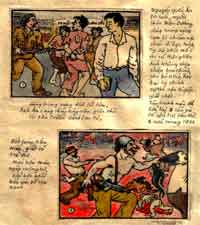
Colonial Resistance as Seen by Vietnamese Graphic Artists from the 1950s

This talk will discuss a collection of recently uncovered and previously unpublished political comic strips depicting the Vietnamese resistance to French colonial rule. The strip was created by three artists: Pham Thong, Mai Van Nam and Ton Duc Luong, all former students of the Ecole des Beaux-Arts d’Indochine in Hanoi. The drawings offer not only vivid eye witness accounts of historic events but also illustrate the extent of artists’ engagements in political issues of the day. The comic book is a relatively underdeveloped art and literary genre in Vietnam, and the discovery of this series proves the need for further research in, and preservation of, valuable iconographic archives both in Vietnam and abroad.

EFEO/Maison de l'Asie : 22 avenue du Président Wilson, Paris 16ème
Nora Taylor (School of the Art Institute of Chicago)

14 mai 2010

Séminaire INALCO | AESCI

Prochain rendez-vous du séminaire "jeunes chercheurs sur le Cambodge" organisé par l'association des étudiants de la section cambodgienne de l'INALCO (AESCI).
--
Mercredi 26 mai à 18h
Gabrielle Abbe
"La "rénovation des arts cambodgiens" : George Groslier et le Service des Arts (1917-1945)"

--
Université de Paris Dauphine
4ème étage - Salle du CERPAIM B409
--
Une intervention d'environ 45 minutes sera suivi par un débat dans la salle.
--
Merci de confirmer votre présence par mail à l'adresse: ade...sito@yahoo.fr 
--

29 mars 2010

[Film] "Angkor, l'aventure du Baphuon", film de Didier Fassio.

"Angkor, l'aventure du Baphuon", film de Didier Fassio coproduit par l'EFEO est programmé le jeudi 1er avril sur France 5 à 21 h 35 dans l'émission « Un soir au musée » ainsi que le samedi 10 avril à 23 h 55 et le dimanche 18 avril à 6 h 35 toujours sur France 5.
Jeudi 1er avril 2010 à 21.35 (inédit)
Un soir au musée : Angkor, l'aventure du Baphuon.
Synopsis :
"Le musée Guimet des Arts asiatiques demeure relativement peu connu du grand public. Situé dans le XVIe arrondissement, ce musée fut inauguré en 1889 par l'industriel et érudit lyonnais Emile Guimet. Laurence Piquet propose de découvrir les collections inestimables qui y sont exposées. C'est l'occasion de partir à la découverte de quelques-uns des mystères de la civilisation khmère. Un documentaire consacré à la restauration du temple du Baphuon, au coeur de la cité d'Angkor, ponctuera les déambulations au sein du musée Guimet. Depuis 1908, les 300 000 pièces de ce temple ont été extraites de l'épaisse végétation. Une impressionnante modélisation en 3D est utilisée pour le montage final."
Soirée arts et culture
Plateau : 20'
Présentation : Laurence Piquet
Réalisation : Catherine Aventurier
Production : MFP
Documentaire
Durée : 52' réalisation Didier Fassio
Production : France Télévisions / Cinétévé / Ecole Française D'extrême-Orient / C.Toutcom ! International
Année : 2009

Exposition - Musée du Quai Branly.

Autres Maîtres de l'Inde
Créations contemporaines des Adivasi
Galerie Jardin - billet exposition temporaire ou billet jumelé
Du mardi 30 mars au dimanche 18 juillet 2010
--
Commissaire général : Jyotindra Jain;
Commissaire associé : Jean-Pierre Mohen;
Conseiller scientifique : Vikas Harish.
--
C’est un autre visage de l’Inde que dévoile cette exposition : l’Inde des populations autochtones et des communautés «folk», dites «Adivasi».
Ces peuples produisent des oeuvres plastiques étonnantes, tant utilitaires que sacrées, bien différentes des standards connus de l’art indien. Pour la première fois en France, le musée du quai Branly présente, dans une démarche thématique et pluridisciplinaire, les productions matérielles, quotidiennes, artistiques et religieuses les plus représentatives de ces populations indiennes et permet ainsi au public de découvrir une part importante, et encore trop méconnue, de l’art populaire contemporain en Inde.
Répartis sur l’ensemble du territoire et recensés en 1950, ces peuples maintiennent leurs traditions artistiques tout en étant en contact avec le peuple indien dominant. Egalement réputés pour les traditions vivantes comme la danse, la musique ou le théâtre, développées à la marge des grandes communautés hindoues, ils restent pourtant très mal connus des occidentaux. Les représentations des Adivasi ont longtemps été porteuses d’idées préconçues bien éloignées de la réalité, tant par les Indiens que par les étrangers. L’exposition montre ainsi leur vrai visage, et met en avant leurs surprenantes productions artistiques.
Photographies, peintures murales de la tribu Rathava du Gujarat, figurines tribales en bronze de l’Orissa et du Chattisgarh, éléments architecturaux sculptés du nord est de l’Inde, sculptures en bois du Karnataka ou du Bihar ou bas-reliefs architecturaux réalisés par les femmes artistes de Chattisgarh sont exposés.
L’exposition s’achève sur les monographies d’artistes contemporains mondialement connus, et présents au plus haut niveau du marché de l’art mondial : les peintres Jivya Soma Mashe et Jangarh Singh Shyam, qui ont choisi d’élargir le champ de leur expression afin de refléter leur situation culturelle contemporaine dans leurs oeuvres.
En provenance des collections du musée du quai Branly, de musées européens et indiens, de collections privées ainsi que de commandes spécifiques à des artistes indiens dans le cadre de l’exposition, les objets présentés témoignent de la vigueur des traditions artistiques de ces différentes communautés, de leur évolution et de leur ouverture au monde extérieur.

20 mars 2010

18 mars 2010

Film : rendez-vous cinématographique sur la laque (Paris)


Le film "La Laque en Asie, de la technique à l'Art" 
(production Réseau Asie - Imasie, CNRS images, 52min, 2010)
sera présenté au Festival Jean-Rouch - 29e Bilan du Film Ethnographique,
au Musée de l'Homme à Paris (M° Trocadéro)
le samedi 27 mars 2010 à 14h30.
Ce film conte pour la première fois la formidable aventure de la laque, cette technique d’excellence présente en Asie depuis plus de 9 000 ans. De l’arbre à laque aux laques synthétiques, du bol « Wajima » du Japon aux meubles laqués à la chaîne en Chine, en passant par le tableau en laque poncée du Vietnam, artisans, artistes et chercheurs vous feront découvrir les différentes facettes de ces objets devenus œuvres d’art.
Contact : Momoko Seto


14 mars 2010

[Article] New List Aims to Stem Tide of Cambodian Stolen Antiquities.

02 March 2010 | Robert Carmichael | Phnom Penh

Cambodia recently released a publication that it hopes will help reduce the number of artifacts being stolen from sites and temples and sold on the international market.
One thousand years ago, Cambodia's Angkorean empire was at its peak, ruling areas that are now part of Thailand, Vietnam and Laos.
Today, its achievements are admired by two-million foreign tourists who visit Cambodia each year.  Many come to visit the crowning achievement of Angkor Wat, the famed temple-city in the Cambodia's northwest.
But, in recent years, Cambodia's rich cultural heritage has been plundered, with many temples and ancient sites ransacked for statues.  Those trying to preserve the heritage sometimes struggle to do so.
Hab Touch is the outgoing director of the National Museum in Phnom Penh.
He says one method recently adopted to combat the theft of antiquities is the publication of a glossy eight-page brochure. The booklet lists the different categories of Khmer artifacts at risk of being stolen and smuggled abroad.
The publication, which is called the Red List, was drawn up in conjunction with the International Council of Museums.
The Red List will be distributed to Cambodian border and customs officials, as well as to museums and auction houses overseas, as part of a strategy to combat the illicit trade.
"I hope that the Red List will also play an important [role] in protecting Cambodian cultural artifacts and I strongly believe that the Red List, in the future, will build more capacity for the protection of Cambodian heritage," he said.
The items on the Red List range from jewelry and weapons to stone heads and bronze statues. The brochure lists beads from more than 2,000 years back and wooden items from just a century ago.
It is, in short, a comprehensive time capsule of Cambodian artistic achievement.
Douglad O'Reilly is the director of Heritage Watch, an organization set up to combat the plunder of Cambodia's cultural heritage. O'Reilly says the problem of looting is widespread.
"I think that the problem is fairly substantial.  We are finding that in rural areas there is quite a lot of activity.  There has been, since about 2000, a significant amount of heritage destruction at archaeological sites that date especially to the period from 500 BC to 500 AD," he said.  "So people are excavating illegally a lot of cemetery sites in the search for carnellian and agate beads and glass beads and other artifacts."
O'Reilly applauds the idea behind the Red List, saying it has the potential to reduce dramatically the number of items being smuggled across the border -- as long as the brochures printed in Khmer and Thai actually reach the officials at the border posts. (...)


- Photo : R. Carmichael / A wall relief stolen in 1998 from Banteay Chhmar temple in north-western Cambodia, and later returned from Thailand. It now stands in the National Museum in Phnom Penh.
- Source : VOA News.

18 févr. 2010

Conférence : Peintures du Ramayana khmer.

Conférence à l'INALCO Rue de Lille, organisée par l'AESCI :

Jeudi 4 Mars à 1930, Salon des LanguesO'
Marie Gamonet
Conférence sur les peintures du Reamker (Ramayana khmer) au palais royal de Phnom penh

Résumé de l'intervention :
Après une présentation historique l'accent sera mis sur le style de l'artiste qui a coordonné ce travail gigantesque, l'Okhna Tep Nimit Mak. Au début du XXe siècle, sous ses ordres, des peintres ont su garder tout autour des 600 mètres du cloître de la pagode d'Argent une qualité de dessin et de composition remarquable. Tous les personnages du Reamker sont traités dans la plus pure tradition.Phnom Penh possède là un joyau inestimable.

Marie Gamonet est historienne de l'art et ancienne élève de l'INALCO.

Une référence bibliographique :
Gamonet, Marie, Le Ramayana au Palais de Phnom Penh. 2 - L'école artistique de L'Oknha Tep Nimit Mak, Péninsule, 2008, no 57, p. 107-165.

3 févr. 2010

Publication : Images et imagination, P. Skilling.


Peter Skilling (ed.), Images et imagination, le bouddhisme en Asie, 2009. ISBN : 978 2 85539 698 9. 25 € TTC.

* Avant-propos, Franciscus Verellen
* Introduction, Peter Skilling
* Nouvelles découvertes en Andhra Pradesh : la vie du Bouddha de Phanigiri, Peter Skilling
* Au service du Bouddha : les centres monastiques en Inde de l’Est, Himanshu Prabha Ray
* La Roue des Renaissances dans les temples bouddhiques, Stephen F. Teiser
* Les temples bouddhiques de la dynastie Śailendra à Java-Centre, Marijke J. Klokke
* Le nirvāna du Bouddha et les dépôts de reliques en Chine médiévale, Sonya Lee
* De Bodhgaya à Kukkuteśvara : la grotte-sanctuaire de Seokguram et les inspirations indiennes, Juhyung Rhi
* La femme et le serpent : le bouddhisme et ses démons dans le Japon d’Edo (1603-1867), François Lachaud
* « Les ornements de la Cité d’Allégresse » : une illustration moderne du Sūtra du Lotus au Japon, Jean-Noël Robert
* Postface, François Lachaud

Les mardis de la section études vietnamiennes - 2010.


(Programme des conférences)

Les conférences ont lieu de 18h à 20h, salle 479C, 4è étage, Bâtiment Grands Moulins, UFR L.C.A.O, Université Paris Diderot Paris-7 - 16, rue Marguerite Duras 75013 PARIS.

- Mardi 9 février 2010 : « Problèmes de traduction », par PHAN Huy Duong (écrivain bilingue, philosophe, traducteur littéraire).

- Mardi 23 février 2010 : « Evocation du Bouddhisme vietnamien d’après la statuaire des temples des environs de Hanoï », par Trâm JOURNET  (conférencière auprès de la Ville de Paris pour les musées Cernuschi et Carnavalet).

- Mardi 16 mars 2010 : « Capitalisme et communisme : le détour et l’accès avec application concrète à la crise mondiale actuelle au Vietnam » par Jean-Sébastien FEGER (de la société IMMOVINA).

- Mardi 30 mars 2010 : « Le travail de terrain en histoire : l’exemple de la localisation des barrages Cam dans le sud du Vietnam », par Amandine LEPOUTRE (historienne à l’EPHE);
et « Une approche de l’archéologie de terrain au Vietnam : la fouille du site de Tuân Châu », par Béatrice WISNIEWSKI (archéologue à l’EPHE).

- Mardi 6 avril 2010 : « Sites web en langues asiatiques : Quel contenu pour quel public ? Expériences d’informatique linguistique » par Pierre ZWEINGENBAUM (chercheur en Traitement Automatique des Langues au LIMSI-CNRS, enseigne au département Textes, Informatique, Multilinguisme de l’Inalco).

- Mardi 4 mai 2010 : Conférence donnée par Philippe PAPIN (directeur d’études à l’EPHE), l’intitulé est à définir).


Télécharger le programme : lien.
Section des Etudes Vietnamiennes : Plus d'informations